A diya in every embassy: How India uses Diwali to bring home to its diaspora
From the first indentured ship to reach Mauritius to a floating holiday at the UN, Diwali has travelled with India's diaspora. Today, India's missions abroad are helping turn it into a bridge between that diaspora, the countries it lives in, and home
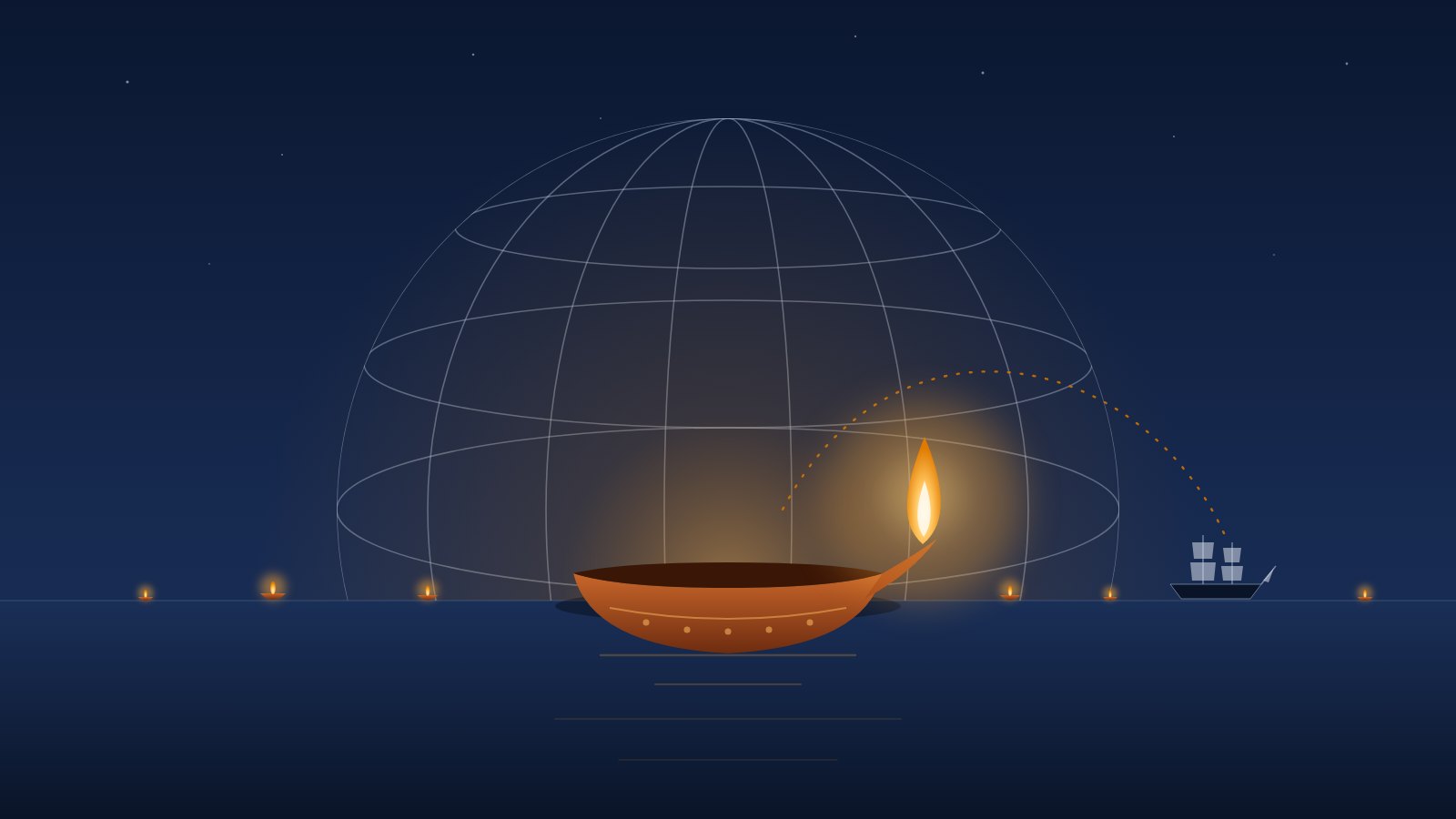
On 2 November 1834, a ship called the Atlas reached Port Louis in Mauritius carrying 36 Indian labourers who had sailed from Calcutta. They had signed five-year contracts with a British firm, and they were the first reported migrants that would reshape the island. Nearly half a million indentured labourers later passed through the depot at Port Louis now known as Aapravasi Ghat, a UNESCO World Heritage site.
One hundred and ninety-two years on, Mauritius still marks 2 November as a public holiday. This year, the Indian Navy frigate INS Tarkash docked at Port Louis to take part in the Aapravasi Diwas ceremonies. Six days later, the island observes another public holiday: Diwali.
Today, that diaspora has grown in size not just in Mauritius but also in several other parts of the world. According to the Ministry of External Affairs, 37.28 million people of Indian origin and Indian citizens live abroad, about 6.08 million of them live in the United States alone. Diwali has become one of the few moments each year when India's missions, its diaspora and the host country celebrate the same thing at the same time. An event Indians look forward to celebrating with their counterparts of other nationalities.
Indians abroad — People of Indian origin and Indian citizens living outside India — All countries: 37.28 million; United States: 6.08 million — Source: Ministry of External Affairs.
From the UN's facade to its calendar
The United Nations marked Diwali for the first time in 2016. From 29 to 31 October that year, the UN Secretariat building in New York was lit up with "Happy Diwali" and the image of a diya, an initiative of then General Assembly President Peter Thomson. India's Permanent Representative, Syed Akbaruddin, announced it on social media: "@UN lights up for #Diwali for 1st time."
Today, a decade later, Diwali sits on the UN calendar as a floating holiday, observed on 9 November this year.
In December 2025, UNESCO inscribed Deepavali on its list of the Intangible Cultural Heritage of Humanity, at a session hosted at the Red Fort in New Delhi. It became India's 16th element on the list.
How the diaspora wrote Diwali into American life
In the United States, recognition has largely been driven by the community itself, with Indian missions amplifying it.
It is the year 2003, and the Indian diaspora, for the very first time, is marking a major milestone of its presence in the US, as this year the White House Diwali tradition began under President George W Bush. In 2009, Barack Obama became the first president to attend one in person. In October 2025, President Donald Trump lit diyas at the White House alongside India's Ambassador.
The first Diwali stamp, issued in 2016, followed a seven-year campaign of petitions and letters led by Indian Americans and supported by members of Congress. Its first-day-of-issue ceremony was held at the Consulate General of India in New York. A second stamp followed this October, unveiled at the Embassy of India in Washington.
State and city laws have followed. New York made Diwali a public school holiday in New York City under a law signed in November 2023. Pennsylvania recognised Diwali as an official state holiday in October 2024. In October 2025, California added Diwali to its list of state holidays, allowing public schools and community colleges to close and state employees to take paid time off.
This year, the eleventh "Diwali at Times Square" drew thousands to the heart of Manhattan in late October, with the Consul General of India in New York among them.
A community that gives back
The recognition reflects the weight the community carries. According to a 2024 report by Indiaspora, a US-based diaspora organisation, Indian Americans make up about 1.5 per cent of the US population but contribute an estimated 5 to 6 per cent of income taxes. The report counts 16 Indian-origin chief executives in the Fortune 500, finds that roughly one in 10 doctors in America is of Indian origin, and estimates Indian American charitable giving at $1.5 billion to $2 billion a year.
Indian Americans' share of the US population and of income taxes — Share of the US total — Population: 1.5%; Income taxes: 5–6% — Source: Indiaspora, 2024. The tax share is an estimated range of 5 to 6 per cent; the bar is drawn at 5.5.
Some of that giving is timed to the festival. SewaDiwali, a volunteer food drive run by Dharmic community groups across the country, has donated more than 2 million pounds of food to food banks and shelters across the US since 2018.
The diaspora's support also flows home and contributes to the economy here. India's net private transfers, which are mostly remittances, reached a record $144.8 billion in 2025-26, according to Reserve Bank of India data cited by the Finance Ministry in Parliament. The United States is the single largest source: RBI's latest remittances survey found it accounted for 27.7 per cent of inflows in 2023-24, ahead of the UAE at 19.2 per cent.
Largest sources of remittances to India — Share of inflows, 2023-24 — United States: 27.7%; UAE: 19.2% — Source: Reserve Bank of India remittances survey.
The embassy as a home away from home
Increasingly, India's missions use the festival to invite others in. Days before Diwali, the Consulate General of India in Dubai held its first multi-country Diwali. During the celebrations, Dubai Police Band performed, more than 5,000 members of the Indian community attended alongside diplomats from 18 countries.
For Indians abroad, these events do something a passport cannot. They gather a scattered community in one room, introduce its traditions to neighbours and officials, and offer a reminder that the country they left still sees them. The Ministry of External Affairs will extend that invitation more formally in January, when the 19th Pravasi Bharatiya Divas convention is held in Kolkata from 7 to 9 January 2027.
Many Ramayanas, many Diwalis
Diwali's story has long had lives of its own even outside India. Thailand's national epic, the Ramakien, adapts the Ramayana. Compiled under King Rama I, its story is painted across the galleries of Bangkok's Temple of the Emerald Buddha. Indonesia's Prambanan Ramayana Ballet has been staged at the temple complex since 1961. Laos has Phalak Phalam, which Prime Minister Narendra Modi had watched during his visit in 2024.
Anand Neelakantan's “Many Ramayanas, Many Lessons” follows that idea, tracing Rama, Sita and Bharata into versions of the story found across Asia. Diwali has travelled the same way: out on ships like the Atlas, and back each year through a diaspora that keeps making it its own.
Misha Bhatt is a communications professional and educator who led India's delegation to the BRICS Youth Summit 2026 in Gandhinagar under the Ministry of Youth Affairs and Sports, and earlier served as a G20 Y20 Research Associate during India's presidency. She is a visiting professor at HSNC University and KES Shroff College in Mumbai.
The views expressed in this piece are the author's own. Global Outlook publishes contributed opinion as a platform and does not necessarily endorse it.
If this piece was useful, subscribe for the right take on global affairs and expert opinions. It is free.
Read more on India
The End of the Cartel Century: OPEC, Russian Crude, US Shale and India's Refining Pivot
A Research White Paper on the Geopolitics of the Global Oil Transition
09 Nov 2026A Quicker Recovery: Why India Is Weathering the Global Market Shocks
With 7% growth, a young workforce and two sovereign upgrades behind it, India's market has held up while the US, China and Brazil lurch.
23 Oct 2026The Hindu Rate of Growth, Reclaimed: India's Case for a New Economic Identity
A Whitepaper on Policy, Growth, and India's Rise in the Global Economic Order, 2014–2026
More from International Affairs
The Gandhian Logic of Peace: India Builds a Larger Playground at BRICS
From Gandhi's internationalism to non-alignment and now multi-alignment, India's 2026 BRICS chairship shows how a large country keeps its freedom of choice.
01 Oct 2026Beyond the State: How Municipal Networks Are Reshaping the Global South
Direct, city-to-city cooperation across the Global South has emerged as an effective operational strategy to tackle overlapping crises, from urban security to climate vulnerability.
21 Sept 2026BRICS is a Hedge and a Signal, One That Delivers Real Leverage in a Multipolar Order
As Washington's regional bets falter, BRICS members insist the bloc is “non-West, not anti-West”