Whispered Prophecies of a Return: Is Hasina Coming Back to Bangladesh?
Fresh violence in Narail after Gopalganj as minority Hindu homes burnt and Awami League support cited. Residents fight back.

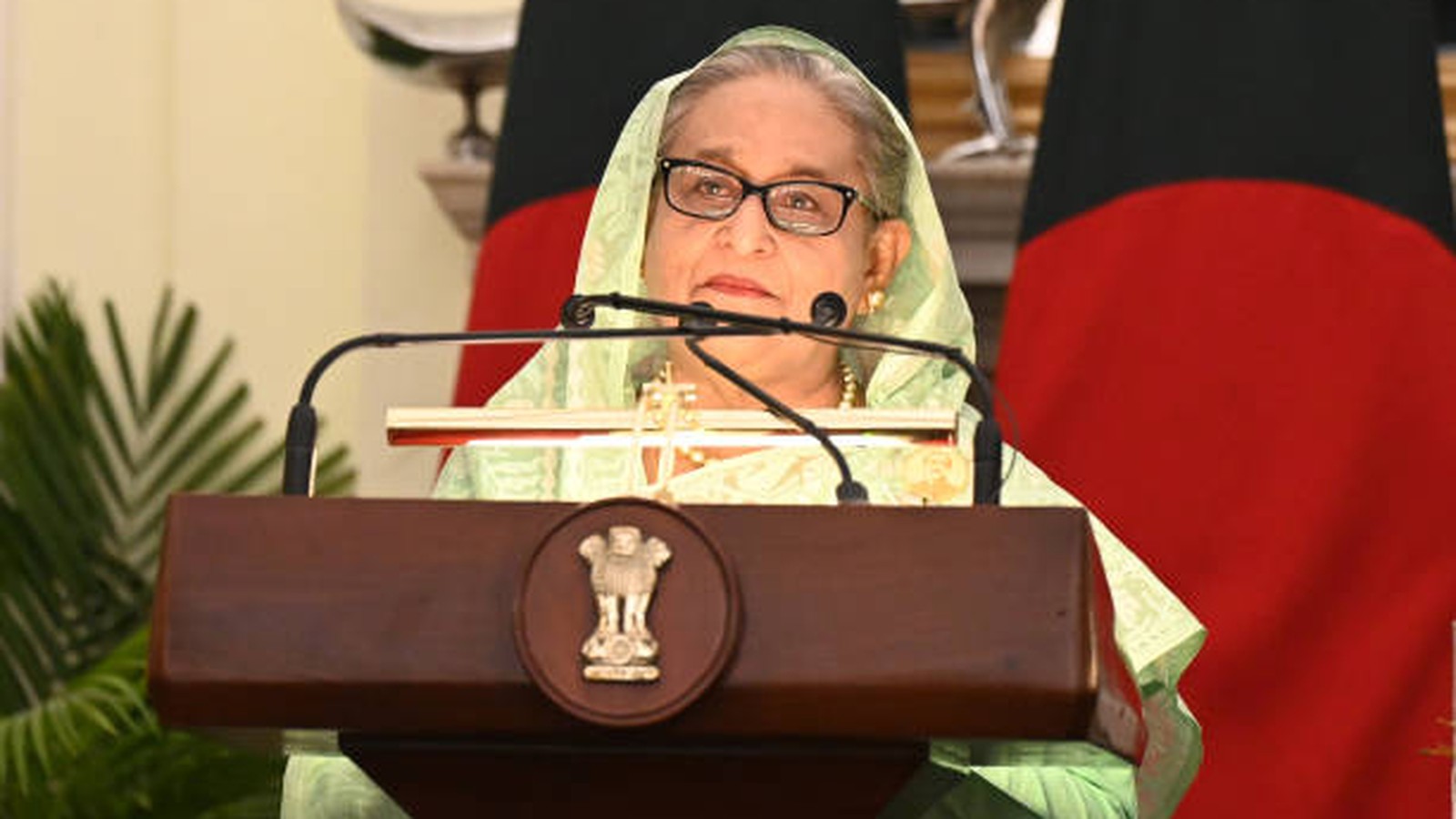
A coup and an escape later, Awami League supporters foretell her return in hushed voices. “…no threat of death will keep me away from my own country," Sheikh Hasina, the 79-year old former leader of Bangladesh stated to media recently. Having been overthrown in a protest that was purportedly a “student protest” but which also followed as part of a larger pattern across Asian nations over the last three years, Hasina’a country descended swiftly into chaos and religious violence. Over a 100 Hindus and at least 30 Buddhists were killed by Islamic mobs often led by Jamaat-e-Islami workers after the coup overthrew Hasina in 2024. Hundreds of women were raped again in a summary reprise of the horrors of the 1971 Bengali genocide, many of them murdered brutally after.
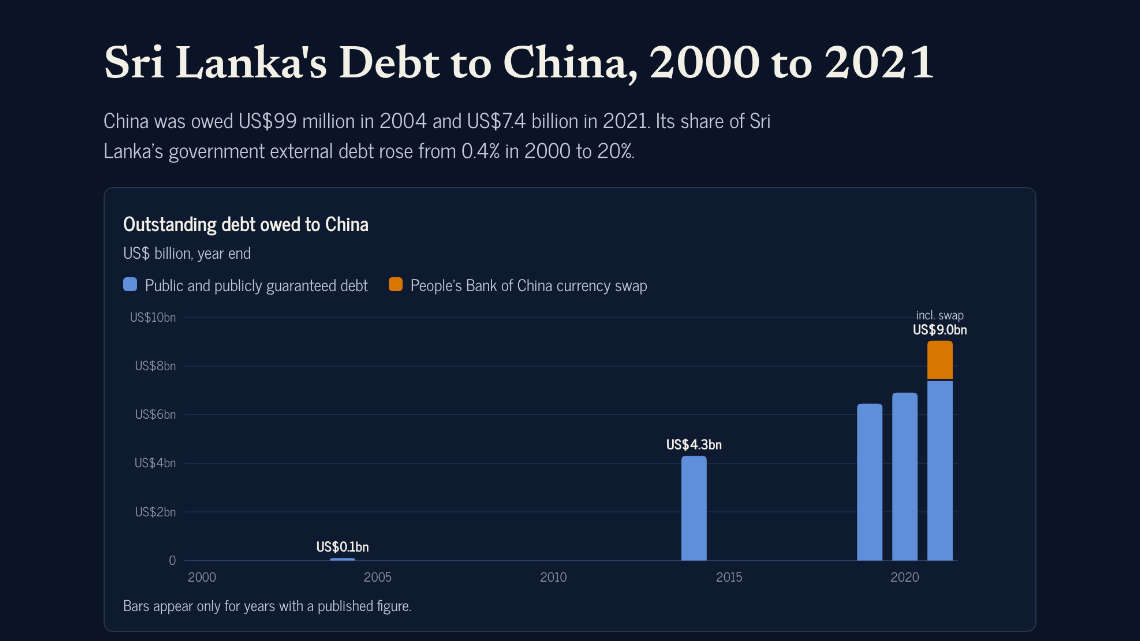
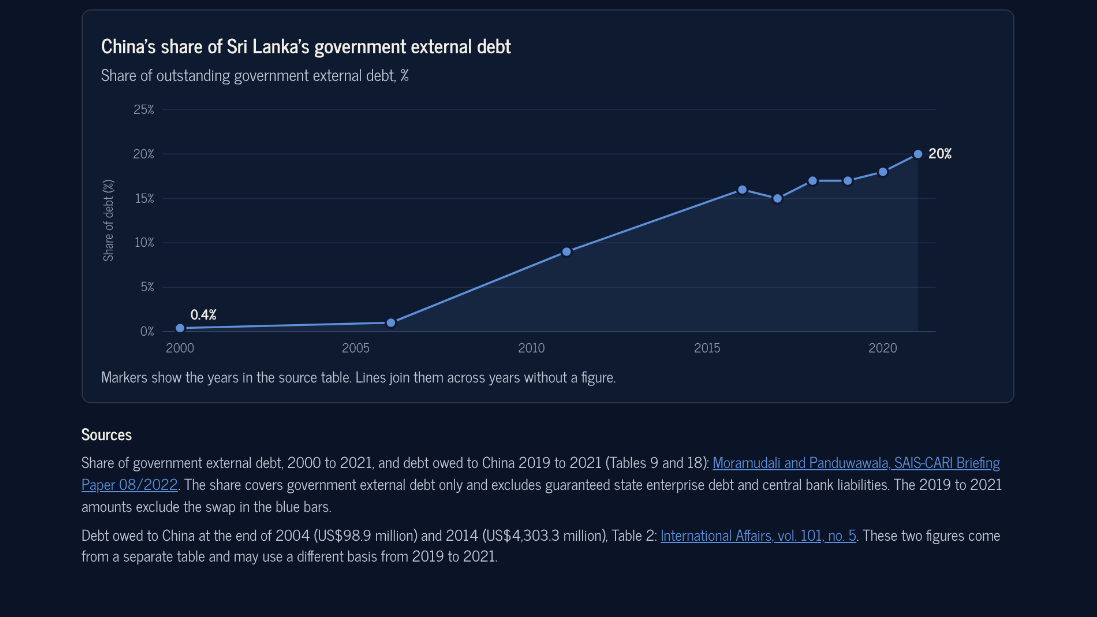
Despite totalitarian tendencies, the country that had faced decades of upheavals after its independence from Pakistan found relative stability under the daughter of Mujibur Rehman. Her reign was pivotal for Bangladesh’s economic growth over the last decade while balancing relations with Asian rivals China and India more delicately than several other nations in the Indian subcontinent have managed. The Sri Lankan economy, for example, collapsed in 2022 with Chinese debt being a significant contributor to its implosion. Beset with allegations of extreme corruption, swift and sudden rise in inflation and nepotism in government, the Chinese dependencies in Sri Lanka reached 20% of all debt held in two decades, before it defaulted in 2022, with India then lending a hand to bail out the country.
China offers loans for several types of projects without due diligence against repayment abilities, making the loan credit process much faster than other parties, an attractive proposition for the borrower nation. Under Hasina, though, while Chinese investment in Bangladesh rose over the fifteen years that Hasina governed Bangladesh, her reign also saw the development and delivery of a very successful textile sector that China was only a supplier to. At the same time, Chinese direct investment in Bangladesh grew from almost nothing to a place among the country's largest foreign investors. The investments rose from $62.3 million in 2010 to close to $1 billion in 2020 and reached $2.67 billion by September 2024, about 43 times the 2010 level. However, was China the problem? The Bangladeshi Prime Minister did not think so.
The former premier holds a different country responsible. “I could have remained in power if I had surrendered the sovereignty of Saint Martin Island and allowed America to hold sway over the Bay of Bengal,” she said in a statement first reported by Indian publication The Economic Times. Her escape to the neighbouring country was also controversial. The polity in Bangladesh has come to become deeply divided over the last few decades with one faction comprising the Bangladesh National Party (BNP) along with the Jamaat-e-Islami (JeM) finding more common ground with erstwhile countrymen in Pakistan based on shared religion, while Sheikh Hasina’s Awami League (AL) kept up a good rapport with her western neighbour India, the central arbiter and eventual enforcer of Bangladeshi independence from Pakistan following the brutal Bengali genocide in 1971. She built an administration that was theoretically secular and despite widespread social unrest and anti-Hindu and anti-Buddhist violence, the Islamic radicalisation was not state-sanctioned under her.
Even as she remains on foreign shores, she had said last year, “I beseech the people of my land, ‘Please do not be manipulated by radicals.’” As she stands sentenced to death in absentia in a trial conducted summarily earlier this year, the country saw over 3,100 incidents of targeted anti-Hindu violence and thousands are said to have been affected by rape, gangrape and murders. This is not uncommon due to the political rhetoric embedded much too deeply in Bangladeshi politics. A significant radical Jamaat-led faction wishes to be Pakistani in its sociopolitico nature and aims for the same allies as well. After the coup and the installation of Democrat-friendly Muhammad Yunus, violence which followed the Color Revolution pattern of using students at the forefront of an assault on governmental assets followed by riots and political capture by western-friendly misfits accused of extreme corruption in their home states, could not be stemmed. Yunus, who received a PhD from Vanderbilt University on a Fulbright Scholarship, and later taught at Middle Tennessee State University and remained in self-imposed exile in the US has also received other U.S. honors, including the Presidential Medal of Freedom and the Congressional Gold Medal. The microfinancing bank he headed is accused of exploiting the poorest of the poor and he continues to be indicted for fraud by Dhaka courts decades after his escape to friendlier lands. The chaos under his interim government continued with assaults on Awami League politicians, their homes burnt, lynching attempts and attacks on Hindu and other minorities. After the 2026 elections after which Yunus flew back to his US home, the country was left with Tarique Rehman, the son of Khaleda Zia, as Prime Minister in an election that banned their powerful opposition Awami League from participating at all. However, this election also exposed the increased radicalisation in Bangladeshi society that had been kept under wraps to a fair extent under AL rule with the lure and promise of economic growth.
JeI, a minor player in elections until the latest spate of violence and a collaborator to Yahya Khan even as his army ethnically cleansed the Bengali-speaking populace, grew from single digits to securing a 32% vote share establishing the party as the country’s main opposition. Much like their former liege, they view the Awami League as “Hinduised” in the same way Khan saw all Bengalis as Hinduised leading to Operation Searchlight and other horrors. While it is possible that some AL votes shifted to the JeI due the banning of Hasina’s party, the massive swing is interesting since the tested leader Khaleda Zia was no longer the primary candidate for the BNP. She passed away in December last year, unable to witness her son take on the premiership of the country she had ruled for so long. India honoured her by sending Foreign Minister S. Jaishankar to her funeral despite security threats. As the Yunus-led “student” cabinet crumbled under the weight of its own corruption, backchannel talks to stabilise the border as well allay security concerns in the Siliguri corridor commonly known as the “chicken’s neck” were already being hoped for after an election. Corruption and Jamaat popularity, alongside outside support for the Jamaat riling up Bangladeshis across villages and towns in the form of Pakistan’s inter-Services Intelligence (ISI) operatives had pushed the Yunus administration to capacity. Ministers in the interim government remained under investigation for massive corruption in a country with a per capita GDP of less than $3,000. The Anti-Corruption Commission (ACC) continues to investigate allegations of an over $800,000 lobbying scandal against Moazzem Hossain, former additional personal secretary to an adviser in the Yunus government. An embezzlement case has also been registered against Atik Morshed. By the end of 2025, an election was announced and Yunus could happily be unburdened of what had been. Tarique Rahman had little idea of what awaited him.
When Tarique Rahman took an oath to serve as Bangladesh’s eleventh prime minister, he consciously chose to go by the name of his father, Ziaur Rahman, a prolific general of the Pakistani army who had revolted and taken part in Bangladesh’s independence struggle and who had been assassinated as so many of Bangladesh’s elder leaders have been. While India had been invited to his oath taking ceremony and the country was represented by Lok Sabha Speaker Om Birla and Foreign Secretary Vikram Misri, Rahman made a significant statement against it shortly thereafter without saying much. His first foreign visits were to Malaysia and China instead of India, while India allowed his opponent Hasina continued asylum and prevented her death. At the same time, Jamaat gained ground and political clout and despite Rahman’s political differences with them, his foreign policy was in sync with expectations from the JeI as well. “Bangladesh First” in theory, Rahman has sought to deepen ties with China, Pakistan, Turkiye and Saudi Arabia, and remained clearly unmoved by the prospect of Bangladesh becoming East Pakistan in all but name again, fifty years after independence.

During the Partition of Bengal in 1947, the Muslim League had argued to receive Siliguri as part of Pakistan, or rather the Darjeeling and Jalpaiguri districts, despite their non-Muslim populations, claiming that they were “isolated” from the West Bengali mainland. Nearly eighty years later, ideological descendents threaten to separate the region again by taking the Siliguri corridor, a narrow strip that connects two parts of India. Since Hasina’s downfall, not only the BNP and the Jamaat, but their predecessor Yunus government has threatened to choke the “chicken’s neck”, prompting retaliatory Indian remarks. This is hardly idle talk. India has steadily militarised the region and increased infrastructure while Pakistan’s ISI agents have been increasing presence there as well. Hasina’s son Sajeeb Wased Joy has cautioned that India faces “another Pakistan” on its eastern borders unless Hasina returns. A former foreign minister also stated that the ISI was involved in the riots that led to the initial coup.
Despite Indian outreach to unelected or partially elected regimes in Bangladesh, the words have steadily seemed prophetic. However, other prophecies have been foretold, and beyond astrology, Hasina has herself predicted her return to her home nation in December of 2026, stating that she is ready to return despite threats to her life and urged the Bangladesh High Commission in New Delhi to give her new documents so she can return. In the meantime, Bangladesh burns, but this time, after hiding away for months, Awami League supporters are finding their strength. Former cricketing captain Mashrafe bin Mortaza’s home in Narail had been set on fire in 2024 after the fall of Hasina, much as other Bengali artists saw their legacies and ancestries attacked. Sunil Gangopadhyay’s ancestral home in Madaripur was also attacked by goons led by BNP leaders and assets burnt. Now, videos show Mortaza leading crowds in Narail in demonstrations against the BNP.

Two BNP members are said to have suffered burns and died in the region even as Hindu homes have been set ablaze. Gopalganj has a nearly 27% Hindu population and saw itself the centre of massive violence since 2024, but especially earlier this month. Narail, with a nearly 16% Hindu population, was also attacked, with homes set ablaze and orange and auburn skies engulfing the night as men gathered or ran, depending on their religion. While BNP supporters suggest that it is support for the Awami League prompting the attacks, the number of Hindus targeted, especially in the poorest regions with little political power make this a red herring. In turn, Awami League support is also tied to support for India, and Yahya Khan’s echoes of a “Hinduised” population used derogatorily remains an easily-picked pattern in these accusations. The administration seems vested in showcasing animosity to its people by directing negative attention toward India and going so far as to illegally detain an Indian Border Security Force personnel recently.
On the other hand, with Awami League establishing itself as the sole protectors of minorities in Bangladesh, there is true support for Hasina’s return among an online Indian commentariat. Whether it translates to Indian politics remains to be seen since despite offering her a chance to remain alive and protected, the Indian government has kept political statements to a bare minimum regarding her return or support for her party, maintaining that peace and stability remain the goals. Media platforming has been relatively low especially considering that Mohammad Yunus had global media to leverage while Hasina’s in-asylum attempts to reach out have been heard only at home and by those following events there. That has not deterred her supporters, however, who seem ready to welcome her after two years of bloodshed and the mirage of an economic spurt crashing before it even made a dent in equitable growth metrics. In an opinion piece for CNN News18, Abhijit Majumdar writes that Hasina “smells weakness in the current government’, and her death risks turning her into a martyr. Her return is predicated on both options being in favour of the Awami League; if she returns successfully, she reigns, and if she is killed in the process, the fire continues burning through Bangladesh awaiting external fire extinguishers but cementing her legacy as a martyr. However, Bangladesh has had too many martyrs. In merely half a century since independence, three former prime ministers have been assassinated, along with a president who was also Tarique Rahman’s father. The legacy is not substantial enough to force change as was seen with the burning down of Sheikh Mujibur’s own home and the legacy of Bangladeshi independence itself upended in the process.
Bangladesh can do more with a moratorium on the violence than with another martyr. However, the political whirlwinds that continue to prevail offer little hope of peace until an actual election with all parties actually participating is allowed. Chris Blackburn writing for the National Interest rightly observes that Bangladesh’s political class seeks insulation from the consequences of the chaos they themselves wrought and that it is unsustainable. Perhaps its people hope that they choose to stand up and take control instead of passing the baton. Totalitarianism has been a signature of all Bangladeshi regimes. Economic growth and political stability has been that of a single one. Perhaps, after fifty years, the people whisper for the return of a GDP steadiness in a geopolitical tinderbox over the return of an old leader. Perhaps for peace. December shall tell.
Sagorika Sinha is an international relations columnist, and a Visiting Fellow at Chintan Research Foundation and Netram Defence Review. She is also the Founder and Editor-in-Chief at Global Outlook.
The views expressed in this piece are the author's own. Global Outlook publishes contributed opinion as a platform and does not necessarily endorse it.
If this piece was useful, subscribe for the right take on global affairs and expert opinions. It is free.
Read more on India
The End of the Cartel Century: OPEC, Russian Crude, US Shale and India's Refining Pivot
A Research White Paper on the Geopolitics of the Global Oil Transition
09 Nov 2026A Quicker Recovery: Why India Is Weathering the Global Market Shocks
With 7% growth, a young workforce and two sovereign upgrades behind it, India's market has held up while the US, China and Brazil lurch.
23 Oct 2026The Hindu Rate of Growth, Reclaimed: India's Case for a New Economic Identity
A Whitepaper on Policy, Growth, and India's Rise in the Global Economic Order, 2014–2026
More by Sagorika Sinha
More from International Affairs
A diya in every embassy: How India uses Diwali to bring home to its diaspora
From the first indentured ship to reach Mauritius to a floating holiday at the UN, Diwali has travelled with India's diaspora. Today, India's missions abroad are helping turn it into a bridge between that diaspora, the countries it lives in, and home
02 Oct 2026The Gandhian Logic of Peace: India Builds a Larger Playground at BRICS
From Gandhi's internationalism to non-alignment and now multi-alignment, India's 2026 BRICS chairship shows how a large country keeps its freedom of choice.
01 Oct 2026Beyond the State: How Municipal Networks Are Reshaping the Global South
Direct, city-to-city cooperation across the Global South has emerged as an effective operational strategy to tackle overlapping crises, from urban security to climate vulnerability.