The Gandhian Logic of Peace: India Builds a Larger Playground at BRICS
From Gandhi's internationalism to non-alignment and now multi-alignment, India's 2026 BRICS chairship shows how a large country keeps its freedom of choice.
In June 1925, Mahatma Gandhi wrote in Young India that it was impossible to be an internationalist without being a nationalist. What he objected to was not nationalism itself, but narrowness, selfishness and exclusiveness.
A century later, that idea reads like a statement of modern foreign policy. As India marks Gandhi Jayanti, three weeks after hosting the 18th BRICS Summit in New Delhi, it is worth asking what the presidency revealed about how India practises strategic autonomy in a volatile period. India's first answer after independence, shaped by Gandhi's moral legacy and given form by Jawaharlal Nehru, was non-alignment, which kept the country outside the Cold War blocs. Today's answer is different. India protects its autonomy by being a voice that every major grouping needs.
In a more crowded, multipolar world, India pursues strategic autonomy through multi-alignment: deep partnerships with many powers, membership of many forums, and dependence on none. India's External Affairs Minister S. Jaishankar has described BRICS as "non-West, not anti-West." In 2026 alone, New Delhi hosted the Quad foreign ministers in May, took part in the Shanghai Cooperation Organisation summit in August and chaired the BRICS summit in September. These forums include powers that are often at odds with one another, and each treats India as a necessary partner. That is what multilateralism gives India: the ability to work with every side without being bound to any one of them.
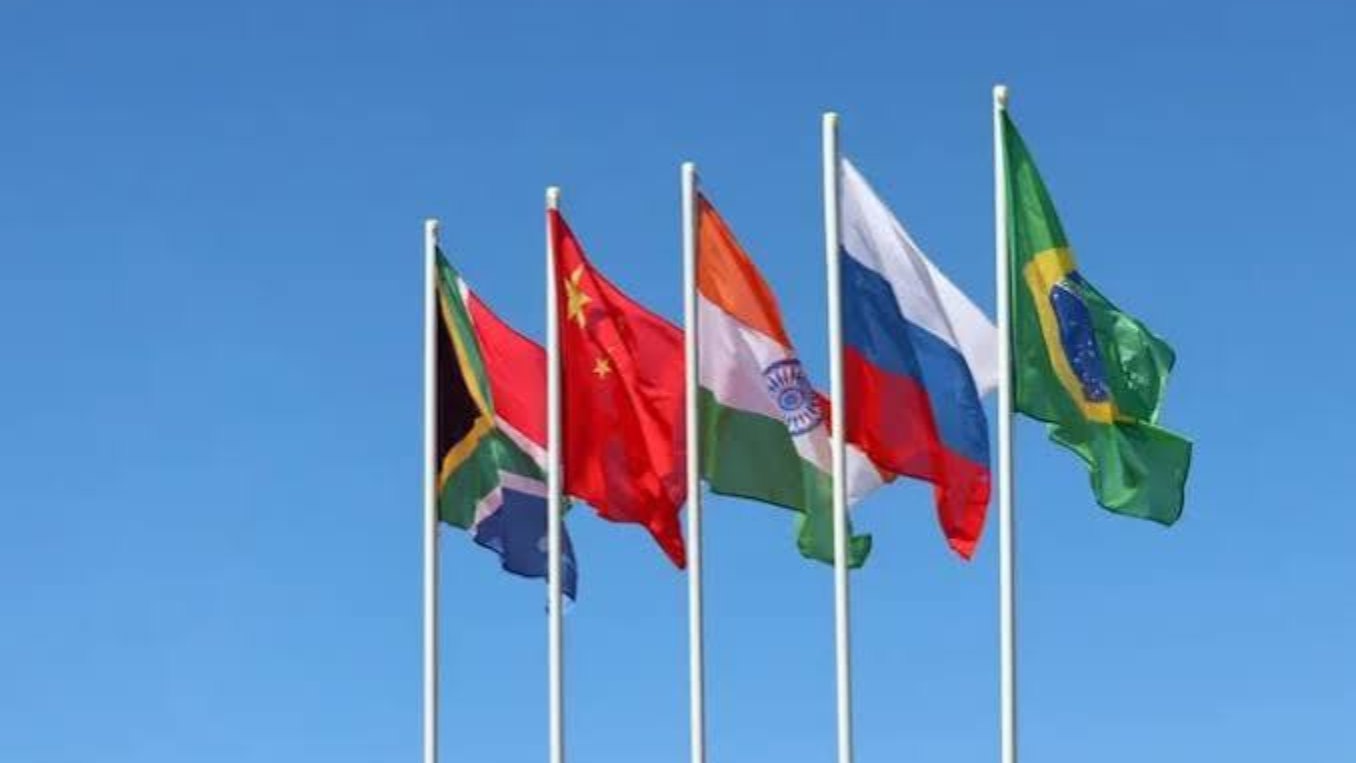
India's fourth BRICS chairship, after those of 2012, 2016 and 2021, tested this approach hard. The bloc now has eleven members, including Iran and the United Arab Emirates, which are on opposite sides of the war in West Asia. Earlier this year, in May, BRICS foreign ministers could not agree on a joint statement, and India issued a chair's summary instead. Going into the leaders' summit, the UAE wanted Iran named in the declaration, while Iran wanted the United States and Israel named. The stakes were high. China's President Xi Jinping was making his first visit to India in seven years, and Masoud Pezeshkian was making the first visit by an Iranian president in eight.
BRICS members during India's four chairships — Number of member countries in each year India held the chair — 2012: 5; 2016: 5; 2021: 5; 2026: 11 — BRICS had five members from South Africa's entry in 2010 until its 2024 expansion. It has eleven members during India's 2026 chairship.
India's response drew on Gandhi's method. Rather than take a side or let the summit fail, Indian negotiators drafted language that named no country and called for restraint. The 45-page New Delhi Declaration was adopted by consensus. Iran and the UAE also signed a separate joint statement on West Asia, and Pezeshkian met the head of the UAE delegation in Delhi, their first known face-to-face meeting since the conflict began. Prime Minister Narendra Modi summed up the approach at the summit: "BRICS is not against anyone."
Gandhi's politics rested on persuasion over coercion, and on the belief that an opponent today can be a partner tomorrow. He kept talking even to those he disagreed with most. India brought the same instinct to a divided bloc, and to its own relationship with China. Xi's visit was his first to India since the 2020 clash in Galwan, and his talks with PM Modi in New Delhi signalled a reset in ties between the two neighbours.
First visits to India in years — Years since the head of state last visited India, at the time of the September 2026 summit — Iranian president: 8 years; Chinese president: 7 years — Xi Jinping's visit was his first to India since the 2020 clash at Galwan. Masoud Pezeshkian's was the first visit by an Iranian president in eight years.
This position is practical as well as principled. A BRICS defined by hostility to the West would force India to choose between its partnerships. A BRICS focused on reforms and shared partnerships keeps India's options open and gives the Global South a stronger voice. Additionally, the declaration reflected this balance, criticising unilateral tariffs and sanctions without naming any country. Modi also called for UN Security Council reform and a greater say for emerging economies in global financial institutions.
India used its presidency to build institutions. With the Prime Minister proposing a BRICS Continuity and Implementation Mechanism, so that decisions are carried through after the presidency rotates each year, and asked members to develop ten proposals for global governance reform before the next summit. He also urged the Global South to help write the rules on AI, cyberspace and other critical technologies. India also proposed a BRICS repository for digital public infrastructure, and the declaration backed more local-currency financing through the New Development Bank.
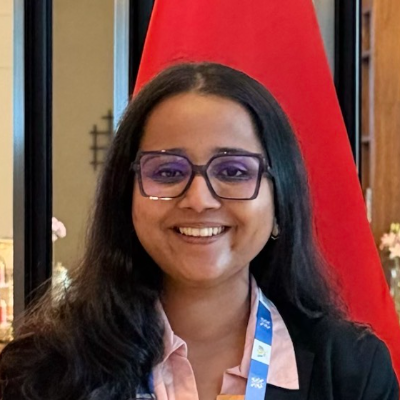
One proposal connects directly to my own experience of the presidency: Modi's call for BRICS to train young diplomats and policymakers from the Global South in negotiation and legal skills. In August, I led the Indian delegation to the BRICS Youth Summit in Gandhinagar, a city named after Gandhi in Gandhi's own home state, with delegates from eleven member and ten partner countries. I delivered India's country statement at the inaugural session and represented India at the roundtable on people-to-people cooperation and youth engagement. We discussed youth exchange, volunteering, and what India's experience of running exchange programmes across 28 states could offer the grouping. Delegates did not need to agree on every geopolitical question to agree on that work. The same principle carried the leaders' summit three weeks later. Multilateralism depends on working relationships like these, built well before leaders negotiate a declaration.
Gandhi's line from 1925 describes the balance India struck this year. As a nationalist, India protected its interests and kept BRICS from turning against any of its partners. As an internationalist, it held eleven governments with competing interests to one declaration. That is strategic autonomy through multilateralism in practice: India stays free to choose because it is trusted across these groupings, and it is trusted because it is against no one.
China takes the BRICS chair next year. The real test of India's presidency is whether its proposals, from the continuity mechanism to training young diplomats, are carried forward. For young Indians like myself, that is the work ahead. Gandhi's method was never about avoiding disagreement. It was about making sure disagreement did not end the conversation.
Misha Bhatt is a communications professional and educator who led India's delegation to the BRICS Youth Summit 2026 in Gandhinagar under the Ministry of Youth Affairs and Sports, and earlier served as a G20 Y20 Research Associate during India's presidency. She is a visiting professor at HSNC University and KES Shroff College in Mumbai.
The views expressed in this piece are the author's own. Global Outlook publishes contributed opinion as a platform and does not endorse it.
More from International Affairs
Beyond the State: How Municipal Networks Are Reshaping the Global South
Direct, city-to-city cooperation across the Global South has emerged as an effective operational strategy to tackle overlapping crises, from urban security to climate vulnerability.
21 Sept 2026BRICS is a Hedge and a Signal, One That Delivers Real Leverage in a Multipolar Order
As Washington's regional bets falter, BRICS members insist the bloc is “non-West, not anti-West”
17 Sept 2026Macron Chooses Populism as France Sanctions Israel
Qatari money, British angst and rising antisemitism have been a recipe for France’s latest Israel policy