Battling “Imperial Overstretch” and War Fatigue, American Citizens Tire of Ukraine
They never supported the war against Iran anyway, and speak up with votes as words no longer suffice.


In The Shawshank Redemption, Andy Dufresne writes to the Maine state legislature once a week asking for money for the prison library. After six years of writing letters, Andy receives $200 from the state for the library, along with a collection of old books and phonograph records. The note with it asks him to stop writing: “We now consider the matter closed. Please stop sending us letters.” Andy’s response is to write more, and Red says he kept writing twice a week until they began to send more money “just to shut him up.” It seems that that sense of optimistic confidence is retained even today regarding the war in Ukraine. Anders Fogh Rasmussen, the former Danish Prime Minister who led NATO from 2009 to 2014, insists that Britain and France should send troops to Ukraine immediately, without waiting for a peace deal. The coalition of the willing, a group of more than 25 countries led by Britain and France, has spent the 20 months since its launch in March 2025 planning a force for the day after the fighting stops. Theoretically, that force, the Multinational Force Ukraine, can deploy only once Kyiv and Moscow agree a ceasefire or a peace deal as a “regenerative” force. Russian displeasure at its formation in October last year forced a partial walkback, and by December its description had changed from “peacekeeping” to “regenerative”.
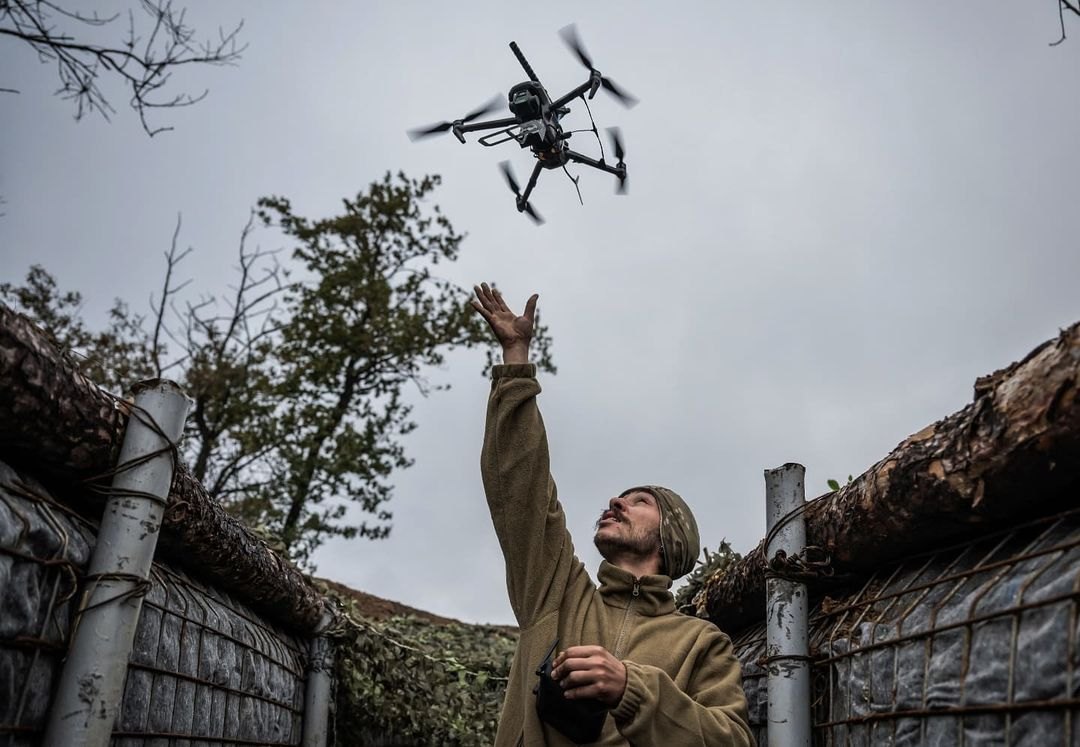
Rasmussen’s demand is the latest in a run of European appeals that have grown sharper as American help to Kyiv has shrunk. Across two years Washington has moved from giving Ukraine weapons through Presidential Drawdown Authority and other donations to selling them with European money. Unfortunately for Europe, the same stocks were then used in the war against Iran. This second war has swiftly lost the American public, and has also cost their vice-president his place in the war room recently. While Ukraine retains sympathy in certain American think tanks, the abject inflation and unemployment-led hopelessness in the American economy has led to a massive public sentiment crisis with material support for Ukraine rankling voters. At the same time, the corruption in the Ukrainian government with Zelenskyy’s own henchmen embroiled in multimillion-dollar scandals destroys the credibility of the donations, and Global Outlook reported on it in its coverage of Ukrainian footprints in international military incidents.
While the EU, or at least its leadership, seems more committed to Zelenskyy’s demands, they are increasingly being seen as not only unending with the President demanding an “audit” of nations that have been supplying weaponry and aid. “First, I think it is important to conduct an audit of all agreements with our partners, with our strategic partners, to see what has been implemented and what is still pending implementation,” Zelenskyy said, repeating his 2025 ask. This is after Operation Midas uncovered the kickback scheme within his own government and domestic audits of where donation goes is either incomplete or untouched. The frustration is understandable, however. As von der Leyen was showered with garbage in Varna by Bulgarians protesting more aid to Ukraine and had to cut her trip short and rush back, Prime Minister Rumen Radev confirmed that Bulgaria would be stopping military aid to the country. Poland has also recently decided to pull aid to focus on its own defence requirements. As individual countries in the EU either retreat to focus on internal affairs or defence amidst wars affecting the global supply chain, Americans are increasingly seeing themselves as being asked to bear too much for a war not their own. While the US refuses to share numbers of military personnel killed in Ukraine’s war, Moscow numbers cite thousands killed with a massive number of Americans killed as “military instructors”, “veterans” and “mercenaries” among those killed in strikes since 2024.
In February last year, Trump berated Volodymyr Zelenskyy in the Oval Office, and the Ukrainian president left without signing the minerals agreement he had come to conclude. Just days later, Washington suspended military deliveries and intelligence sharing, restoring both only after Ukrainian officials accepted an American ceasefire proposal in Jeddah in March. This was more in keeping with pre-Qatar-airplane-Trump’s “Peacekeeper Era”, at a time when he sought to broker peace between all countries at war in the world. Trump’s intent to keep peace also fared badly in May 2025 when India attacked Pakistan following a Pakistan-sponsored and Pakistan-led terror attack in India’s Kashmir valley. His version claiming to have brokered peace as Indian missile strikes were rumoured to have hit a US-controlled nuclear site in Pakistan was dismissed by the Indian government, reducing his chances at the Nobel Peace Prize he had been aiming for. At the same time, he had been trying to broker peace between Russia and Ukraine through multiple phone calls with Putin and Zelenskyy, and calling delegations from both nations to Istanbul. Following Ukraine’s bombing of Russian refineries just a month later, Trump gave up.
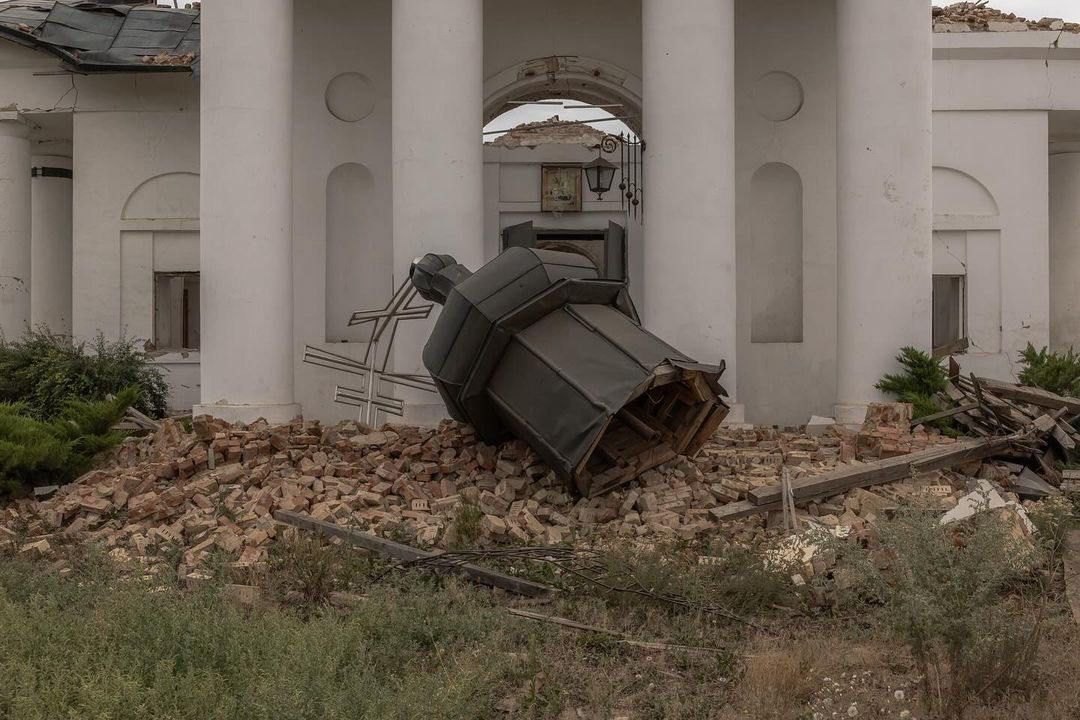
For most of 2025, American policy on Ukraine was built around the condition that Europe would pay for whatever reached Kyiv. In early July the Pentagon halted some shipments, Patriot interceptors among them, after which Trump announced that NATO allies would buy American weapons for Ukraine instead of donating them as “aid”. This arrangement became the Prioritised Ukraine Requirements List, or PURL, and by September 2026 allied payments through it had passed $10bn in a year.
This year’s war with Iran has left Ukraine and the United States competing for the same air defence missiles. Israel and the United States attacked Iran on 28th February 2026, exactly a year after the Zelenskyy debacle in the Oval Office was shown to the world, killing Iran’s Supreme Leader Ali Khamenei. Iran’s retaliatory missile attacks on Gulf states that host American bases have run much longer than the Trump administration seems to have predicted. In late March the Pentagon weighed diverting interceptors ordered under PURL to West Asia, and Trump said the United States pulled weapons meant for Ukraine for other theatres “all the time”. By early May the Iran campaign had consumed nearly half the American stock of Patriot interceptors. Reports also said that the Pentagon had told Congress it would redirect about $750m of PURL allocations to restock American inventories, and defence officials moved Patriot missiles out of Europe to the Gulf as the war went on.
The missile redirection was followed by troop redirections as well. The Pentagon started to move soldiers away from Europe’s eastern flank. In October 2025 it withdrew a brigade combat team from Romania and a few months later it asked Bucharest to host up to 500 American troops, with tanker aircraft and surveillance drones, to support operations against Iran. Friedrich Merz, the German chancellor, said “an entire nation is being humiliated by the Iranian leadership” and that Washington had no exit strategy for Iran, expressing frustration at the reduced support for the Ukrainian war. Days later, the Pentagon announced it would withdraw 5,000 troops from Germany, where American bases staged operations against Iran and military hospitals treated soldiers evacuated from the Gulf. Marco Rubio, the US secretary of state, cited the president’s “disappointment” with NATO allies over their response to West Asian operations. In September the Pentagon was reported to be weighing the withdrawal of a third of American forces in Europe, after allies refused the use of their air bases for the second war. American citizens were by then drowning in a cost-of-living crisis the MAGA movement had vowed to fix when it won in 2024, on a platform that also promised an end to military intervention, championed by figures such as Tulsi Gabbard, who joined the cabinet and has since lost influence.
Wages and prices, 12 months to September 2026 — Change on a year earlier — Average hourly earnings: 3.0%; Consumer prices: 3.7% — Source: US Bureau of Labor Statistics. Average hourly earnings of all private nonfarm employees; consumer price index for all urban consumers.
American losses in Iran are less than transparent, and while official sources put them at 18, the real count is rumoured to be much larger. The US had also spent at least $37.5bn by the summer, while Moody’s put the citizen cost at $447.19 per household on average, a cumulative burden of close to $60bn across the country after three months of war. The Pentagon has sought about $80bn in supplemental funds to replace munitions used in the war. Earlier this month, Pete Hegseth, the war secretary, pressed Congress for at least $350bn in defence funding.
According to Reuters/Ipsos data, citizen sentiment for the Iran war has been negative throughout and continues to decline. 43% of Americans disapproved at the start; 54% now say the military action against Iran was not worth its costs. Their voting patterns have moved with their support.
In June, the Senate approved a House-passed resolution to end hostilities by 50 votes to 48, with the Republicans Lisa Murkowski, Susan Collins, Rand Paul and Bill Cassidy in favour. It was the first time both chambers had passed such a measure since the War Powers Resolution of 1973. The measure carried no binding force, however. The US-Iran Memorandum of Understanding collapsed within weeks, when American aircraft struck more than 80 targets in Iran on 7th July, and Trump notified Congress soon after that the war had resumed. In September the House voted by 220 to 204 to end it, its third such vote, with seven Republicans in support. Citizens followed and delivered a victory to Democrats in the House and Senate in this month’s midterm elections. By Vance’s account, “The reason we lost is the war.” He added that many voters who backed Republicans in 2024 had switched to the Democrats over the war, with the cost of living, America First and the relationship with Israel among their main concerns. Uncharacteristically, Trump agreed with his second-in-command and told reporters that Vance was mostly right, citing higher petrol prices, but repeated that the war had to be fought. More characteristically, Vance was summarily removed from oversight of the Iran war.
Republicans voting to end US hostilities against Iran — War powers resolutions in Congress, 2026 — House, 3rd June: 4; Senate, 23rd June: 4; House, 16th September: 7 — Source: CBS News.
Vance had begun the term as the administration’s sharpest voice against Kyiv, accusing Zelenskyy of disrespect during the Oval Office exchange. He led the first round of talks with Iran in Islamabad on 11th and 12th April, but after they ended without a deal, Trump said Vance would not lead the second round. Vance was also the face of the US-Iran Memorandum of Understanding, which fell through, and the blame was pinned entirely on him. Andy Baker, his closest foreign policy adviser and a deputy national security adviser, announced his departure shortly after. Two officials told the Wall Street Journal that Trump had privately asked in recent weeks whether the June memorandum was a costly mistake.
In The Rise and Fall of the Great Powers by Paul Kennedy, written after America’s misadventures in Vietnam, “imperial overstretch” is the term used for a great power whose commitments outrun its capacity to meet them. There remains a single such power today, and its “overstretch” shows. The Iran war drove up petrol prices and catapulted annual inflation to a three-year high in the spring; prices rose 3.7% in the year to September, and cheaper crude has not brought relief. Annual wage growth now trails the latest 3.7% inflation rate, and people working part time for economic reasons have risen from 7.6% to 7.9% since the second war began. Technological progress has not helped sentiment. Of all announced US job cuts in the first half of 2026, 23% explicitly cited AI, and recent college graduates’ unemployment rate was 5.2%, up from 3.9% in May 2022.

Rasmussen’s and Zelenskyy’s demands are addressed not to their own nations or citizens but to a “global audience”, which in practice means the US as NATO’s enforcer. Speaking of Russia, EU Vice President Kaja Kallas said on 16th November: “Then, you know, in 2021, there was a clear, you know, pretext for war that the Russians were giving a list of their demands. And now they’re presenting the same demands and adding to it.” Brussels reiterated that Russian demands to curb NATO expansion preceded the war and remain the same, but European and American enthusiasm to disregard Russian demands is fading fast despite the Russia hawks. In April 2026 Rasmussen warned that the Iran war had drained the American stocks Europe buys from, leaving less to send Ukraine, and in June he argued that the American approach to European defence had changed for good and that Ukraine’s battle-hardened army had a part to play in defending Europe. This week he called the Anglo-French grouping “more now a coalition of the waiting”, a play on “willing”, and proposed that its British and French troops go in at once as a reassurance force for Ukraine’s population centres. The same day, Trump told a Veterans Day ceremony that he wanted “a total victory, not a 93% victory” in Iran. On 3rd November, American voters rejected both.
Sagorika Sinha is an international relations columnist, and a Visiting Fellow at Chintan Research Foundation and Netram Defence Review. She is also the Founder and Editor-in-Chief at Global Outlook.
The views expressed in this piece are the author's own. Global Outlook publishes contributed opinion as a platform and does not necessarily endorse it.
If this piece was useful, subscribe for the right take on global affairs and expert opinions. It is free.
More from War
Borrowed Soldiers: The Mecca Pact’s First Test
As Houthi missiles reach Riyadh, Saudi Arabia has sent out an SOS to its oldest patron and its newest allies. Their answers, or rather “Statements” of solidarity show how much protection was ever on offer.
23 Sept 2026Too Many Arabian Proxy Wars; Too Little Peace
Partners in Yemen's 2015 coalition, Saudi Arabia and the UAE now arm opposing sides in Sudan's civil war and southern Yemen, while Sudan's civilians bear the world's largest displacement crisis.
19 Sept 2026Kyiv's International Footprint as Viewed from the Receiving End
Budanov marks Intelligence Day by describing Ukrainian reach that runs from Germany to Africa. Foreign governments register UN cases against HUR's overreach.