India's Labour Data Has No Category for Gig Workers
Gig workers are now covered by the Code on Social Security, yet the PLFS, e-Shram and Census 2027 do not identify platform work. Four changes would fix that.

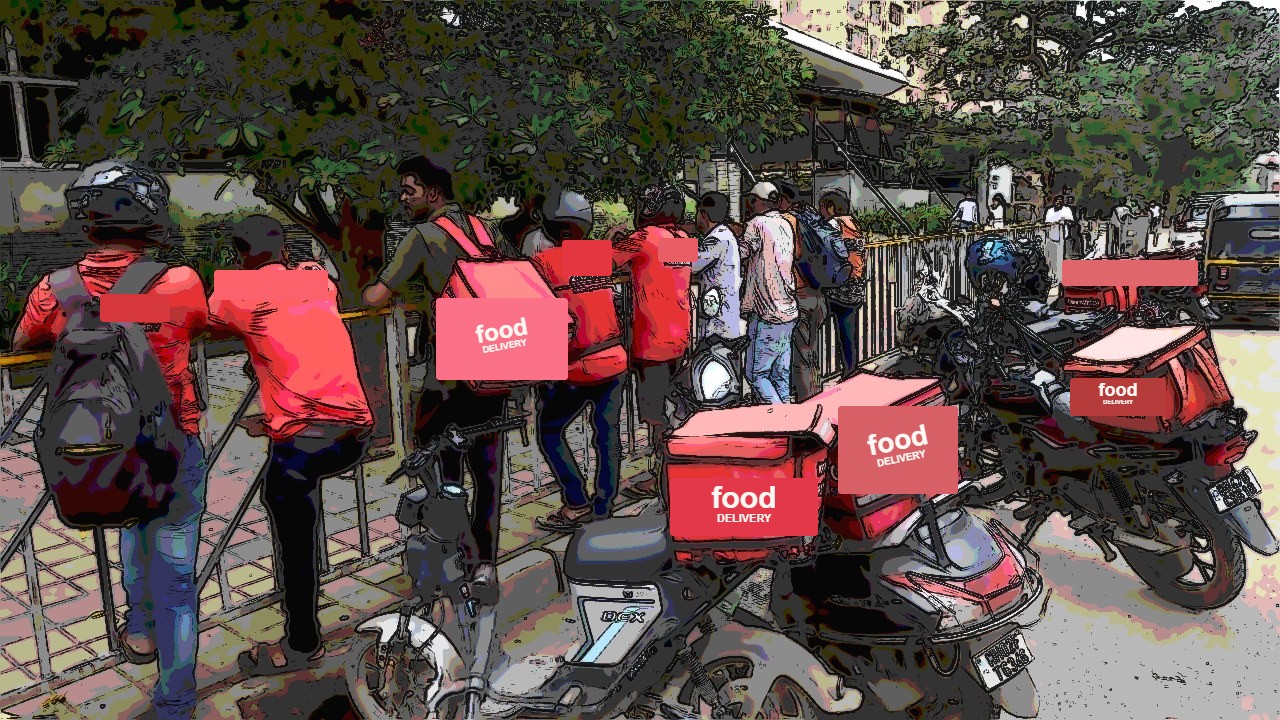
India’s gig and platform workforce has expanded rapidly over the past decade, and public debate on its consequences has centred largely on earnings. Income is an important measure of welfare, but an incomplete one. The economic significance of gig work depends substantially on the employment it displaces, and in this respect India’s experience differs markedly from that of advanced economies.
A Different Starting Point
In the United States and Europe, platform work has emerged alongside a formal labour market in which salaried employment, with its attendant protections, is the norm. Policy debate there has accordingly focused on whether platform workers are being denied the rights of employees.
In India, the relevant counterfactual is different. Self-employment and casual labour together account for over three-quarters of the workforce. Even among regular wage earners in non-farm work, 58% have no written contract and 53% receive no social security benefit. For many Indian gig workers, platform work is not a departure from formal employment but a step towards it.
Regular non-farm wage earners in India without basic protections — Share of regular wage earners in non-farm work — No written contract: 58%; No social security benefit: 53% — As cited by the author.
This distinction matters for how worker choices are interpreted. Field evidence from India, though limited in scale, indicates that ride-hailing workers earned no more after joining platforms, yet regarded flexibility as sufficient reason to continue. Similar findings exist for advanced economies. A study of nearly 200,000 Uber drivers in the United States estimated that drivers derive more than twice the surplus from flexible arrangements that they would from fixed schedules. Participation in gig work, it appears, is driven as much by quality of life as by income.
Value US Uber drivers place on flexible schedules — Driver surplus relative to a fixed schedule, study of nearly 200,000 drivers — Fixed schedule: 1×; Flexible schedule: more than 2× — As cited by the author. Fixed schedule set to 1.
Policy responses have diverged in line with these contexts. The European Union’s Platform Work Directive establishes a rebuttable presumption of employment for platform workers, to be transposed by member states by December 2026. India has taken a different path. The Code on Social Security, 2020, in force since November 2025, recognises gig and platform workers as a distinct category. It requires aggregators to contribute 1–2% of annual turnover, capped at 5% of payouts to such workers, towards a social security fund.
States have moved in parallel. Rajasthan (2023) and Karnataka (2025) were the first to enact dedicated legislation, followed by Bihar, Jharkhand and Telangana. These laws broadly provide for worker registration, welfare boards and funds financed by levies on aggregators.
India’s approach thus extends protection to gig workers without requiring their reclassification as employees. In a labour market where the principal alternative to gig work is informal employment, this is a pragmatic and well-calibrated choice. Several other Asian economies, including Thailand and Pakistan, continue to deliberate on draft legislation.
Women and Gig Work: Strong Signals, Thin Data
The implications for women are potentially more significant, and considerably less understood. Accounts from platforms, workers and civil society consistently point to gains in earnings, financial independence and self-worth among women engaged in gig work.
Interviews with women gig workers in India suggest that much of this work is not new. Women continue to provide domestic, beauty and care services they previously offered informally. What changes is the setting. Platform work offers flexibility over hours, access to insurance and financial guidance, and other forms of support that would otherwise be difficult to obtain. None of these gains, however, can yet be verified at scale.
A second, indirect channel may also be at work. Household survey data show a marked shift in the composition of women’s employment. The share of rural women workers engaged in casual labour fell from 31.8% in 2017-18 to roughly 19% in 2023-24. The decline is concentrated in casual agricultural labour, among the most physically demanding and least remunerative forms of work.
Rural women workers in casual labour — Share of rural women workers, 2017-18 and 2023-24 — 2017-18: 31.8%; 2023-24: about 19% — Household survey data as cited by the author. The fall is in share, not absolute numbers; women's workforce participation rose over the same period.
One plausible explanation is an income effect. Research on India has long associated rising household incomes, and stigma attached to menial work, with lower participation by married women. If gig work has raised or stabilised the earnings of male household members, it may have enabled women, particularly those newly entering the workforce, to avoid such work.
The hypothesis warrants caution. The decline is in share rather than absolute numbers, as women’s workforce participation rose sharply over the same period. Other factors, including direct cash transfers to women, may also contribute. Testing the hypothesis requires identifying gig workers in household data, and this is precisely what India’s official statistics do not yet do.
The Next Step: Counting Gig Work
India’s statistical system is better placed than ever to address this gap. The Periodic Labour Force Survey was redesigned in January 2025, expanding its sample to about 2.72 lakh households and introducing monthly estimates. Census 2027 will be the country’s first digital census. The e-Shram portal has registered more than 300 million unorganised workers.
None of these instruments, however, yet identifies gig work. The PLFS classifies workers as self-employed, regular wage earners or casual labourers, with no category for platform-based work. e-Shram relies on voluntary registration, and the share of platform workers registered remains negligible, even in states with dedicated legislation. The Census 2027 questionnaire records occupation, industry and class of worker, but does not distinguish platform work.
The gap can be closed through modest additions to existing instruments rather than new ones, and other countries offer workable models. Indonesia’s national labour force survey identifies gig workers through questions on the use of the internet and online marketplaces at work. The US Census Bureau has identified platform workers by coding the occupation descriptions respondents already provide in its American Community Survey.
Global standards are also taking shape. The International Labour Organization has established a technical working group to prepare statistical standards on digital platform employment, due for consideration at the International Conference of Labour Statisticians in 2028. With one of the world’s largest gig workforces and a functioning policy framework, India is well placed to help shape them.
Closing the Data Gap
Four measures would allow India to move from anecdote to evidence.
First, the Office of the Registrar General and Census Commissioner should code Census 2027 occupation responses to flag platform-based work. As the data are being captured digitally, this requires analytical effort rather than new fieldwork.
Second, the Ministry of Statistics and Programme Implementation should add a single question to the PLFS asking whether work was obtained through a digital platform or app. The survey’s new rotational panel design would then allow movements into and out of gig work to be tracked over successive months.
Third, analysis need not wait for new questions. Existing PLFS unit-level data link members of the same household. This permits a comparison of women’s employment in households where men work as drivers or delivery workers with that in otherwise similar households. The Ministry, together with research institutions, can begin this work immediately.
Fourth, the Ministry of Labour and Employment should link e-Shram registration to tangible benefits under the Code on Social Security, and enable aggregators to share anonymised worker data for statistical use. Aggregators are already required to maintain databases of platform workers; channelling these records into official statistics would add precision at little cost.
India has moved early and thoughtfully to protect gig workers. The same foresight must now extend to measuring them. If gig work is indeed helping women move away from drudgery, it may prove to be one of the more significant levers for women’s economic participation. Establishing whether it is would allow policy to build on it with confidence.
India has led on gig policy. With better data, it can lead on gig evidence too.
Nirupama Soundarajan is Co-Founder & CEO, Policy Consensus Centre.
The views expressed in this piece are the author's own. Global Outlook publishes contributed opinion as a platform and does not endorse it.
More from Trade & Finance
The Fading Force of American Tariffs on China
Weeks after China tightened rare-earth licensing in 2025, a Ford plant stopped. Xi Jinping arrives in Washington with the same licensing rules still in force.
13 Sept 2026An Optimistic Look at India's Credit Upgrade and its Limited Signal
Japan's rating agency lifted India to A- on steady growth, even as AI-driven job losses, militarised borders and urban protests test citizen sentiments.